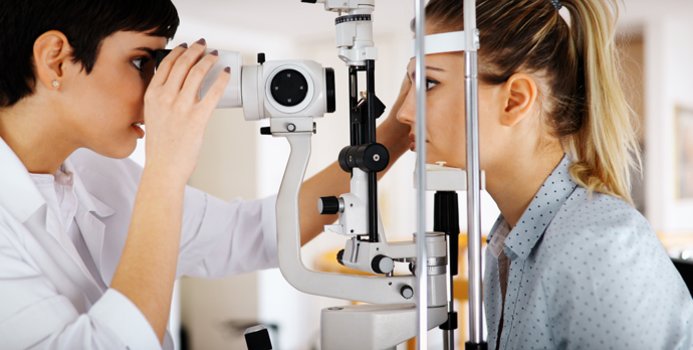
If there was a relatively simple exam that could help your doctor detect or prevent a wide range of serious health problems, you probably wouldn’t hesitate to schedule an appointment. Many people don’t know that routine eye exams provide vital information about their overall health and half of all Americans opt out of their annual eye doctor visit. Eye exams can be just as effective as a physical at detecting the early stages of certain health problems. If caught early, many of these conditions can be treated more effectively or even prevented. Here are some health problems that eye exams can detect.
Diabetes
The effects of diabetes can be seen throughout the body, but your eye doctor may be able to detect the disease by examining the blood vessels in the back of your eyes. An early indicator of diabetic retinopathy, a symptom of diabetes, is a small amount of retinal bleeding or yellowish discharge. If this condition is diagnosed and treated early, healthy lifestyle changes can help you prevent further eye damage including blindness.
Multiple Sclerosis
Eye exams are an effective way to detect optic neuritis, a disease linked to multiple sclerosis. Optic neuritis is an inflammation of the optic nerve and can be the first symptom many of those with the condition may experience. Although some people with multiple sclerosis have vision loss, eye pain, or reduced color vision, many have no symptoms at all. If optic neuritis leads to a diagnosis of multiple sclerosis, prompt treatment can lessen or reduce the symptoms.
High Blood Pressure
If your eye doctor detects damage to your blood vessels or narrowed arteries when examining the back of your eyes, it may be an indicator you have high blood pressure. This condition is linked to dangerous health problems including heart disease and strokes. Most people with high blood pressure do not have any symptoms but when it’s caught early, the condition can be effectively managed through lifestyle changes and medication.
Rheumatoid Arthritis
People with a rheumatoid arthritis diagnosis have elevated levels of chemicals in their blood which causes inflammation throughout the body. Although the small joints in the hands and feet are commonly affected, about one-quarter of those diagnosed suffer from eye issues including dryness. Dry or burning eyes could be the first sign of this autoimmune disease. An eye exam may detect the disease early so you can take steps to treat the problem and alleviate the symptoms.
Your office is your headquarters and your home away from home, whether you choose to accept it as such or not. Most of us spend a bare minimum of forty hours a week in our ergonomically designed office chairs, staring at computers that have been placed at eye level and outfitted with keypads that help prevent carpal tunnel syndrome. With all this thought placed into correct workplace ergonomics, it’s surprising we aren’t more concerned with our vision at work.
If you’re a typical office worker, you spend close to your entire day pecking away on your keyboard gazing at your computer screen. Virtually all of our day to day business is now conducted online or electronically, making the need for easily accessible and comfortable computer work increasingly important for us.
One of the biggest complaints daily computer users and office workers make is the effect that staring at a screen has on their eye health. Even if their complaints range from headaches to neck and shoulder pain, the main culprit typically stems from vision. The reason we have tired, strained eyes is due to blue light exposure. The solution can be blue light glasses.
Is There Blue Light in My Office?
Chances are, the answer to this question is a resounding yes. Blue light is light that is emitted from electronic devices and some LED light bulbs. Devices that are blue light emitting culprits include computers, tablets, smart phones, and LED flat screen televisions and monitors. All of these devices emit a considerable amount of blue light, which enters our eyes up to fifteen hours a day, depending on how much time we spend at the office and at home in front of devices and televisions.
If you think you might be suffering from blue light exposure, here are some tell-tale signs for which you can look:
Eye strain, pain, and fatigue. If you suffer from eyes that feel strained, tired, irritated, and even red, it may mean you are suffering from blue light exposure from your computer.
Neck and shoulder pain. If you feel tension and tightness in your neck and shoulders, chances are you are positioning your body in a way that you can move closer to your computer screen to see the onscreen text. This position is usually not ergonomically sound, even if you’re seated in an ergonomically sound chair, and thus, you experience neck and shoulder pain which can sometimes radiate down to your back.
Blurred vision/lack of ability to focus. If you’re thinking it might be time for glasses, don’t be so sure. While there’s a possibility you might need vision correcting lenses, another culprit could be blue light exposure. Blue light scatters more quickly and is harder for our eyes to focus on, which can make us feel like our vision is blurry or even doubled at times.
What Can Prevent Blue Light Damage?
If you’re convinced by now that your nine to five might be harming your eye health, we’re with you. Thankfully, there is a solution. Blue light glasses are a type of eye-wear you can use while working on a blue light emitting device. They consist of a frame with specialized, non-corrective lenses that effectively filter and scatter the blue light that attempts to enter our eyes while we work.
While the lenses of blue light glasses may appear tinted, they will not cause you to see in a different color nor will they affect your vision in any way other than filtering out harmful blue light. Though blue light glasses are not vision correcting, they are available in vision correcting prescriptions so that users who need vision correction can also benefit from their ability to refract blue light.
When Can I Wear Blue Light Glasses?
You can wear blue light glasses safely whenever you are using a blue light emitting device. Because you likely spend a great deal of time in front of a blue light emitting device in your office, using blue light readers in your office is extremely important. Keeping a pair of blue light glasses at your desk will ensure they are available for you to use when you need them. Many users prefer to keep a pair at home, at work, and in the car. You can even wear your blue light glasses in the car, if blue light from the sun bothers your eyes as well.
Blue light glasses are safe and effective for use by people who spend much of their time working behind a computer screen. Blue light is emitted from devices like LED television monitors, computer screens, and smart devices. As such, our eyes are constantly bombarded with blue light, which can cause discomfort like eye strain, pain in the neck and shoulders, blurred vision, and tension headaches. Using blue light glasses can eliminate these unwanted side effects and help you work safely and more efficiently. >> Source: augustafreepress.com
Now Available at Laser Eye Surgery of Erie
We currently have a wide selection of colors and styles of Blue Light Glasses to best suit you and your needs. Stop in to our Optical Boutique soon to see which pair speaks to you!
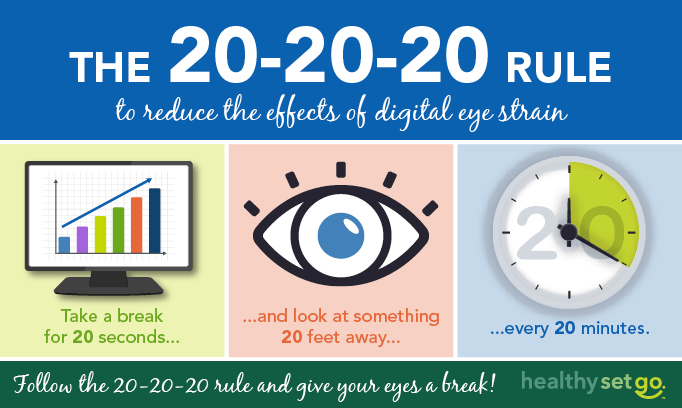
Spending long periods looking at computer, phone, or tablet screens can strain the eyes. Using the 20-20-20 rule can help to prevent this problem.
The rule says that for every 20 minutes spent looking at a screen, a person should look at something 20 feet away for 20 seconds.
Following the rule is a great way to remember to take frequent breaks. This should reduce eye strain caused by looking at digital screens for too long.
In this article, we describe how to use the 20-20-20 rule effectively. We also discuss the research behind the rule and other tips for preventing eye strain.
How to Use the 20-20-20 Rule
Following the 20-20-20 rule involves taking a 20-second break from looking at a screen every 20 minutes.
The 20-20-20 rule was designed by Californian optometrist Jeffrey Anshel as an easy reminder to take breaks and prevent eye strain, according to the Optometry Times.
When following the rule, a person takes a 20-second break from looking at a screen every 20 minutes. During the break, the person focuses on an object 20 feet away, which relaxes the eye muscles.
The following methods can help a person to put this rule into practice:
Set an alarm for every 20 minutes while working, as a reminder to take a break.
Download an app developed to help people follow the 20-20-20 rule. The ProtectYourVision and eyeCare apps are some examples.
Look out a window during the 20-second breaks. Judging a distance of 20 feet inside can be difficult, but focusing on a tree or lamppost across the street should work well.
Alternately, a person can benefit from closing their eyes for 20 seconds every 20 minutes. Also, remembering to blink can prevent dry eye by encouraging tear production.
Anyone who spends the day sitting should periodically get up and walk around, to prevent back and neck pains.
Results of a 2013 study involving 795 university students suggested that those who periodically refocused on distant objects while using the computer had fewer symptoms of computer vision syndrome, which include eye strain, watering or dry eyes, and blurred vision.
Symptoms of eye strain
Several symptoms can indicate eye strain, including:
Sitting in the same position for a long time has other harmful effects on the body. For example, it can cause neck, back, or shoulder pain.
Tips for Preventing Eye Strain
Like the 20-20-20 rule, the following methods can help to reduce or prevent eye strain:
Applying eye drops can help a person suffering from dry eyes, which can occur when using digital screens for long periods.
Using eye drops. A person blinks less than usual when using digital screens, and this can dry out the eyes. Drops or artificial tears can be purchased at most pharmacies, as well as online. Specialty eye drops are available for people who wear contact lenses. Preservative-free eye drops are best.
Change computer settings. Making text twice as large as usual can reduce eye strain. Reading black text against a white background is easiest on the eyes.
Reduce screen glare. Protective anti-glare screens can be applied to computers and eyeglasses, to prevent eye problems. Also, flat screens tend to have less glare than curved ones.
Adjust the screen’s contrast. Change settings so that the screen is bright enough to read the text without straining. The right contrast may change, depending on the presence of sunlight.
Get regular eye checkups. Poor eyesight is a major cause of strain. Regularly attending checkups will ensure that a person has an updated prescription when needed.
The strategies listed above require little time or financial commitment, but they can reduce eye strain related to using tablets, phones, and computers.
Outlook
The 20-20-20 rule is an effective way to reduce eye strain caused by looking at digital screens for long periods.
If eye strain persists after a person has tried using the rule and other methods of prevention they should see a doctor, who can check for underlying conditions such as chronic dry eye.
The eye doctor may need to evaluate their vision and test the level of moisture in the eyes. When making recommendations, the doctor will take a person’s occupation and overall eye health into account.
Six Things to Consider when Choosing the Best Sunglasses
Everyone knows sunglasses make it easier to see on a sunny day, whether out on the road or the water. However, wearing the right sunglasses is also a great defense against ultraviolet (UV) rays that can cause short- and long-term eye damage, according to the American Academy of Ophthalmology.
These are the most important factors to consider when purchasing sunglasses to protect your eyes from the sun:
1. Make it 100 percent.
The single most important thing to look for when buying sunglasses to protect your eyes is a sticker or tag indicating that they block 100 percent of UV rays. However, fewer than half of people buying sunglasses bother to check whether the lenses protect the eyes from ultraviolet light, according to the Academy’s 2014 national sun safety survey.
2. Bigger is better.
The more coverage from sunglasses, the less sun damage inflicted on the eyes. Consider buying oversized glasses or wraparound-style glasses, which help cut down on UV entering the eye from the side.
3. Darker lenses don’t protect better.
While very dark lenses may look cool, they do not necessarily block more UV rays.
4. Color doesn’t matter.
Some sunglasses come with amber, green or gray lenses. They do not block more sun but can increase contrast, which may be useful for athletes who play sports such as baseball or golf.
5. Polarized lenses cut glare, not UV.
Polarization reduces glare coming off reflective surfaces like water or pavement. This does not offer more protection from the sun, but can make activities like driving or being on the water safer or more enjoyable.
6. Cost shouldn’t be a factor.
Sunglasses don’t have to cost a lot of money to work well. Less expensive pairs marked as 100 percent UV-blocking can be just as effective as pricier options.
If you’re looking for a diet that’s healthy for your eyes, here’s some good news: The same diet that helps your heart and the rest of your body will help your eyes. Plus, you’ll enjoy many delicious choices.
For 2020: The Year of the Eye, the American Academy of Ophthalmology intended to list 20 vision-healthy foods. Instead, we came up with 36. It’s a diet rich in fruits, vegetables, beans and fish.
Why Is Nutrition Important for Good Vision?
“Some nutrients keep the eye healthy overall, and some have been found to reduce the risk of eye diseases,” said Rebecca J. Taylor, MD, an ophthalmologist in Nashville, Tennessee.
Eating a diet low in fat and rich in fruits, vegetables and whole grains can help not only your heart but also your eyes. This isn’t surprising: Your eyes rely on tiny arteries for oxygen and nutrients, just as the heart relies on much larger arteries. Keeping those arteries healthy will help your eyes.
What Should I Focus On for Eye-Healthy Eating?
Orange-colored vegetables and fruits with vitamin A
Perhaps the best-known eye-healthy nutrient is vitamin A. Your retina needs plenty of vitamin A to help turn light rays into the images we see. Also, without enough vitamin A, your eyes can’t stay moist enough to prevent dry eye.
Carrots are a well-known source of vitamin A. Sweet potatoes provide even more vitamin A, Dr. Taylor said. “A sweet potato has more than 200% of the daily dose of vitamin A doctors recommend.” Fruits, including cantaloupe and apricots, can be a good source of vitamin A.
Fruits and veggies rich in Vitamin C
Vitamin C is critical to eye health. As an antioxidant, vitamin C helps protect the body from damage caused by some things we eat, unhealthy habits and environmental factors. Fried foods, tobacco smoke and the sun’s rays can produce free radicals–molecules that can damage and kill cells. Vitamin C helps repair and grow new tissue cells.
Another important antioxidant is vitamin E, which helps keep cells healthy. Vitamin E can be found in avocados, almonds and sunflower seeds.
Cold-water fish with omega-3 fatty acids
Diets rich in omega-3 fatty acids from cold-water fish may help reduce the risk of developing eye disease later in life, research suggests. These fish include salmon, tuna, sardines,halibut and trout. “Omega-3’s are good for tear function, so eating fish may help people with dry eye,” Dr. Taylor said.
Leafy green vegetables rich in lutein and zeaxanthin
Lutein and zeaxanthin are antioxidants found in the pigments of leafy green vegetables and other brightly colored foods. They are key to protecting the macula, the area of the eye that gives us our central, most detailed vision. Kale and spinach have plenty of these nutrients. Other foods with useful amounts of lutein and zeaxanthin include romaine lettuce, collards, turnipgreens, broccoli and peas. And while not leafy and green, eggs also are a good source of these nutrients.
Beans and zinc
The mineral zinc helps keep the retina healthy and may protect your eyes from the damaging effects of light. However, zinc can lower the amount of copper in your body, which we need to help form red blood cells. Fortunately, you can increase both at once with all kinds of beans (legumes), including black-eyed peas, kidneybeans and lima beans. Other foods high in zinc include oysters, lean red meat, poultry and fortified cereals.
Should I Get Eye-Healthy Nutrients Through Vitamin Supplements?
Eating the right food is the best way to get eye-healthy nutrients, Dr. Taylor said. “In general, most Americans can and should get enough nutrients through their diet without needing to take supplements.”
People who have macular degeneration are an exception. “In this case, taking supplements is recommended by the Age Related Eye Disease Study 2, a follow-up to the AREDS (Age-Related Eye Disease) Study. Talk with your ophthalmologist if you or a family member has AMD,” Dr. Taylor said.
No matter your age, it’s not too late to start eating healthy, she said. “So many of my patients focus on a healthy diet only after they’ve been diagnosed with a serious health problem. Start eating well now to benefit your vision and your health for the rest of your life.”
Written By: Celia Vimont
Reviewed By: Brenda Pagan-Duran, MD Sourced From https://www.aao.org/eye-health/tips-prevention/fabulous-foods-your-eyes